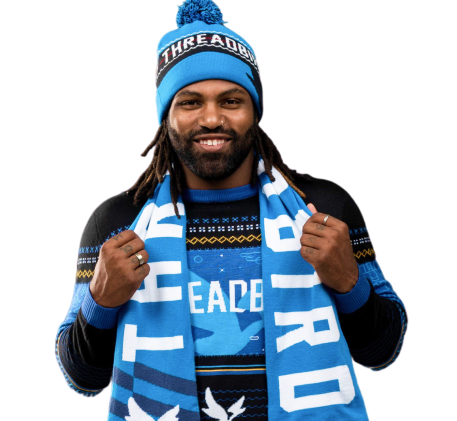
First off tell us about yourself. Who is Jason Carne?
First and foremost, I’m a self taught print designer at heart working under the moniker Mainframe Media. Last fall I took the plunge into owning a brand and designing and buying designs for myself (which is difficult as us designers are always our worst critics) for Among Villains. I’m also very passionate about music that has meaning and real message behind it.
What made you want to jump into running a brand? How did you make the leap from designer to brand owner?
It seemed like a natural progression to me to move towards owning a brand as a creative outlet from client based design work. Among Villains is something that I’ve had in my head for a few years, and it seemed like the money and timing would finally be right last year for it to come to fruition. Playing art director and being the client for once in the design game felt strange, but I worked with an all star line-up of artists such as Craig Robson, David Smith, Brian Luong, George Daugherty and the guys over at The Black Axe whom made starting this brand up a pleasure.
Lets jump from there, why did you call the brand Among Villains? Was there a deeper meaning behind the name or just something that sounded fun?
As I said earlier, I’m a sucker for music with a message, and politics are at the forefront of my lyrical interests. The name Among Villains carries a sort of dark irony and sarcasm to it. Society largely labels the hardcore, metal, punk, and hip-hop communities as degenerate groups that are mostly up to no good, when in my life experience the inverse of that is almost always the reality. Good people deemed bad by social stigma and unwarranted judgement is what it boils down to!
Definitely see the connection there. In getting started with Among Villains, what would you say the biggest hurdle was for you to overcome? So many designers seem to think “I already make designs, why can’t I sell shirts?” Sounds simple enough but was it really that simple for you?
I think I overestimated how easy being a brand owner is like many other designers before me have. I had the notion in my head that if I just had solid products and designs in the shop that they would fly off of the shelves; sort of a “if you build it they will come” mentality at its onset. However, as any indie brand can tell you, it’s NOT that easy, and that’s something I learned pretty quickly. It takes a lot of hard work and marketing to get your product out there, especially as a start-up. With no hesitation, I’d absolutely say raising brand awareness and spreading the reach of the brand is by
far the toughest obstacle, and it’s one you have to deal with on a daily basis if you ever want to go anywhere.
Venturing away from the hardships, what’s been your favorite part of starting your own brand?
Shipping new orders, hands down. So many brands seem to take their sales and their customers for granted, as if they are just more money in the bank. The money matters of course (anyone would be lying if they said otherwise), but it’s the fact that those customers spent money on MY products over anyone else’s is what brings me happiness as a brand owner. In a sea of competition, making a sale means that the person who bought your shirt or poster or whatever, did so because they genuinely enjoy what you’re offering, and that’s all you can really ask. Appreciation and recognition from your customers is a great thing and it’s not to be undervalued.
Digging deeper into the shipping, you did custom packaging for your garments. Printed boxes and custom tissue paper. What do you feel that added to the experience and financially do you feel it was worth it?
It definitely was a big hit to the wallet, but I feel like it was worth it without a doubt. So often you see just standard envelopes and mailers that blend in with the rest of the mail, but I didn’t want that for my customers. I wanted something that they knew immediately was an Among Villains shirt, something they will remember my brand by. The screen printed boxes and tissue paper really add to the total experience and standard of high quality I try to maintain with the brand in every area. It’s my way of saying thank you to my first 150 customers for supporting Among Villains in its infancy.
A couple more for you, then we’ll wrap this up. What do you see as the near future of Among Villains?
At the moment, I’m working on making my way into more retail stores and trying to branch out into different products rather than just t-shirts. I don’t want to give too much away, but there may be some accessories and custom items in the works soon.
How has your experience been thus far with retail? I know that retail stores tend to pay less for products where you make volume profit instead of regular profit as if you were to sell the item yourself. As an indie brand, how is that working for you?
The profit margin definitely is a bit lower, but being placed in a retail environment gives a whole new dimension to your sales. At the moment I’m only in two shops, but it helps gain information about what products sell where and why. If you are willing to trade exposure for a few bucks per shirt it’s worth the venture, especially if wholesaling as you get a bigger payday and move a lot of inventory at the time. Consignment is a tough gig that I don’t recommend, especially if you’re working with shops that are too far to check up on yourself as you never know when your paycheck is coming (if ever). The one downside for me is that I don’t get to know my customers when selling that way like I do when selling online, otherwise, it’s a great way to build awareness and spread the shirts around to new markets.
On the topic of exposure, are you getting into band / tour sponsorship at all? If so, why? If not, why not?
I’m not doing any tour sponsorships, I feel like they are a waste of money for what you get out of them (unless you have the time and resources to travel with the tour). However, there are a few bands I’m looking to work with that seem to share my outlook and my views and could represent the brand well. Nothing is certain on that front yet, but I don’t rule it out. There are definite benefits to having touring bands wear your merchandise all through the country and abroad.
Time to wrap up! Anything else you’d like people to know about Among Villains? Any promo / coupon codes you’d like to give out?
Everyone loves a discount, don’t they? For 15% off your entire order enter the coupon code “THREADBIRD” at checkout, it will be good for up to 20 uses. I’d like to thank you for taking the time out to do this interview, and I’d also like to thank you for doing a killer job printing up my shirts. If all goes to plan, sooner rather than later I’ll be back to print some more with you guys. I hope anyone who’s read this has enjoyed doing so, and if you have any further questions you’d ever like answered, just shoot me an e-mail at jason@amongvillains.com – take care!
At Threadbird, we are always striving to improve the way we do business internally. It’s important in a virally connected world that we are staying productive. In our search for some new productivity tools this week, we’re giving you some of the highlights of what we found.
www.sproutsocial.com - Looks to be a pretty useful social media management tool. Really well-designed user interface. Link it to your Twitter, Facebook, LinkedIn & Google Analytics accounts to get a better handle on your social interaction. Free 30 day trial, but pretty expensive for what you get, starting at $39/month.
www.do.com - “Social Productivity App for Your Team”. Create and share projects, tasks and notes with your team. Has a native iPhone app and a superbly executed iPad web interface. And to top it all off… quite possibly the best product video I’ve ever seen, hands down.
www.hipchat.com - Group chat and IM. If you’ve been using Campfire as your team chat client, you might want to look into HipChat as a replacement. However, we’re not convinced quite yet. The iPhone app has 1 star and there is an echo when using video chat without headphones. However, not having to switch over to iChat/AIM for audio/video chat could be a deal maker if the bugs get worked out.
www.podio.com - A social work platform for your company. If you’re searching for a social enterprise solution for your business, you should definitely check out Podio. It’s not quite Salesforce, but it’s fully customizable and could be a game changer for your business. There are 100′s of apps that you can install into custom workspaces, in fact I’m documenting this blog post from an app I installed in a workspace called “Blog” right now.
What are you using to stay productive with your team?
When we show up at work each morning, we’re reminded of how fortunate we are to be doing what we are doing. We provide superior screen printing services to clothing brands, musicians and amazing people around the world every day.
Although a large portion of our business is done over the internet, the one thing that keeps us excited about what we do is you, the customer. We love thinking about you opening the door to find a box of your custom shirts waiting to be worn. We love seeing you tweet about your excitement and post pictures of the product fresh out the box. We love thinking about the t-shirts being worn at concerts, the hoodies keeping you warm at football games and the families all sporting the same getup at reunions!
Without you we wouldn’t exist. It’s our goal starting off the New Year to find ways to improve our customer service and to show our appreciation for you! Be on the lookout for changes throughout the year and please take a second to say hello (even if you don’t have a print order coming up), we love to hear from you!
If you have some great pictures of the product we printed for you, send them to us or post them to our Facebook page.
Ever wonder what happens with your order after you place and pay for it? Check out the PDF we put together describing the Threadbird Process. Click the image below to view the full PDF:
Foalio (http://www.foalio.com) has upped the ante on helping Artists find Jobs. From the creators of Threadbird, Foalio offers free creative job listings and portfolios.
“Over the past few years at Threadbird, we’ve received requests for artists and designers, from clients who need to hire one but don’t know where to look,” says Foalio Co-Founder Scott Anderson. “We saw a huge need to help jobs find artists.”
Unlike other portfolio sites and job posting services, Foalio doesn’t charge anything to post a creative job listing. When jobs are posted, they can be seen and applied for by anyone browsing the site. Artists are also notified by email when a job is posted in their creative field, helping them get the work they need.
“It’s not uncommon that people searching for an artist are on a tight budget,” says Foalio Co-Founder Nick Rocccanti. “Most sites are charging $100-200 just to post a job. If your budget is $300, you’ve just spent half of it and still don’t have an artist! We want everyone to have fair access to hiring the right artist.”
Foalio also includes the following features:
Artist portfolios to showcase projects, descriptions, links and items for sale
Browse projects and artists to find the style you are looking for
Share projects and jobs on Twitter, Facebook and via email
Resume builder for easy access to more info on an artist
See which artists are currently available for hire
Mark an item as “Pre-Made” and sell it as a ready-to-go template
We recently sat down with one of our wonderful clients, Neil Westfall, to talk about his clothing line Elevated Engineering. If the name strikes you as familiar, it may be because he is the guitarist of A Day to Remember. Elevated Engineering has been Neil’s outlet for expression through design as opposed to music. Enjoy.
How did you come up with the name Elevated Engineering for a clothing brand?
We wanted a name that represented what we were going for, clothing that was engineered to a higher standard. Every item is very detail orientated from the design to the actual garment itself.
Were you concerned at all when you started about confusion when people saw the name alone?
No, because that is exactly what I wanted. I wanted to make clothing that that made people ask questions. Somthing that made the people that knew about it feel special.
Why did you decide to start Elevated Engineering?
I wanted a way to express my self creatively through a different medium than music.
Your designs don’t seem to follow any “theme” How do you decide on your designs? Do you have an overall look you’re trying to achieve with Elevated Engineering?
Each design concept is an idea between us and the artist. All of the desings go back to what has influenced us to be who we are today. We have always wanted to be a company that was based heavily on art.
What do you feel has been the toughest thing for you to accomplish in the building of your brand?
Being patient. Since the brand began we have always strived to keep the growth organic. This way people that connect with it and know about it really feel special.
You’ve got a little bit of everything in your catalog: windbreakers, tanks, shirts, hoods, etc. Do you feel diversity in items is essential in the development of a brand? Can a clothing line exist on basic t-shirts alone?
Every brand has to start somewhere. I think for the first couple items you make you can get away with just making t-shirts. If you want to be taken seriously I feel like you need to always be investing in yourself. Making new items and pushing the bar with every release.
Do you have any advice you could impart to budding clothing lines who could learn from mistakes you may have made in your past?
I think one of the most important things to remember is the fit of an item. You should find the brand that suits what style you are going for. Samples are key with every item!
Fun Question: Deserted Island… you can take one of each:
Book: How to survive on a deserted island … The book.
Music: I would probably bring my iPod so I was never limited.
Something Random: A boat so I could leave whenever I got tired of being there.
Is there a featured product right now, or something that you’d like us to highlight?
The featured product for men’s is the SKATE TEE designed by devoner
What has been your favorite piece so far? Why?
The ELVTD CREW windbreaker. We designed this ourselves and it really means a lot to me. I can tell this design is going to be a staple piece to our brand.
Do you have any message you’d like to share with people who will read this about Elevated Engineering?
Elevated Engineering is a lifestyle. We are the masters of the free world.
Is there a sale going on or a possible coupon code we can give out with the feature?
We don’t run coupons, but all of our out of season items are currently on sale on our website: www.elevatedengineering.com
One of the most common questions and misconceptions clients have when it comes to screen printing is that they will be able to get a “sample” print before their entire run is printed. While rules are made to be broken I can guarantee that almost every screen printing company in America will not print you a sample without charging you a fortune and here is why.
To understand why screen printers can not print samples is to first understand the screen printing process.
First thing you must take note of is that screen printing is indeed a “process” that involves several steps before your t-shirt can come to life. While I am not going to go into deep details here are the basic steps for the screen printing process.
1. Preparing art for print: Art is separated by color into different layers. This is done because with the screen printing process each color in a design requires a separate screen. For example a five color print will require 5 different screens which layered on top of each other will form the final image.
2. Films: While not all screen printing companies use photo emulsion, a lot of them do and here is the process. Basically the original image is transferred onto an overlay such as acetate, usually by photocopying. This is once again done for each layer in the design.
3. Screens: Each piece of photocopied acetate is then burned onto the emulsion covered silk screen using ultraviolet light. The areas that are clear harden the emulsion. After this the screens are washed and the areas of emulsion that were not exposed to the light get washed away leaving you a negative of each layer of the artwork.
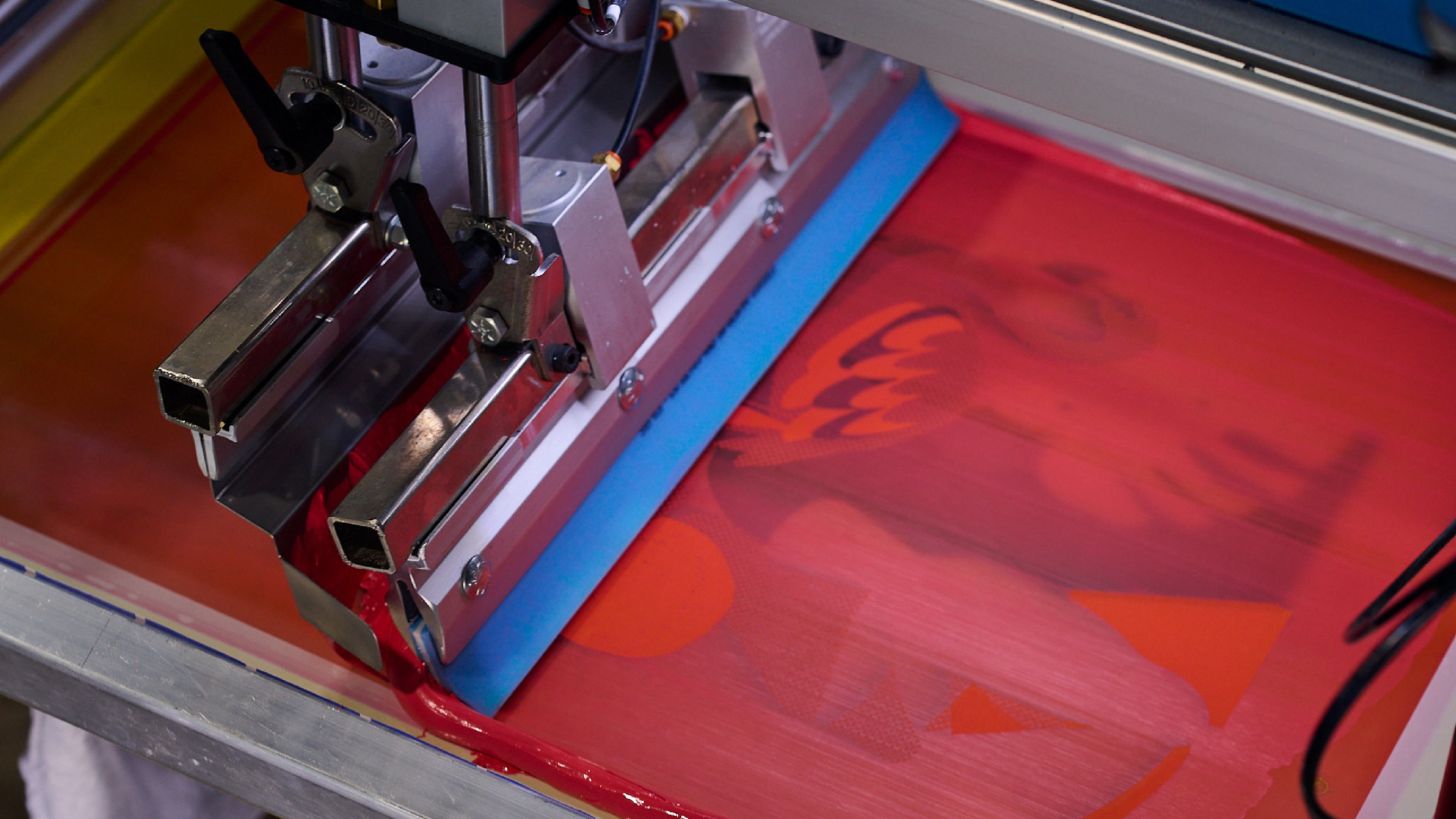
4. Printing: Each screen is then attached to the printing press where each layer/color is laid down individually by squeegeeing ink through the screen and onto your tee. This is done for each layer until you have your final image.
5. Drying: After all layers have been laid down on top of each other and the final image has been created, each tee is sent through a high powered dryer to cure the ink and form your final product.
As you can see even when breaking down the process to the simplest form there are a ton of steps involved in bringing a t-shirt to life. Each step requires labor, time and of course money.
The setup process is truly the most expensive part of screen printing. Once a press is setup and ready to go it really doesn’t make that much of a difference if you are running 50 tees or 500 tees. When you increase your total quantity it allows the screen printer to eat up a lot of their overhead cost. This is why you get a much better price break when going with a larger quantity of tees!
As you can see without even looking at the individual costs for screens, films, ink, labor, and the tee itself making just one t-shirt as a sample is an extremely expensive and time consuming operation to pull off! Remember it is called the “Screen Printing Process”, and it is indeed a process.
There is however a bright side when printing with Threadbird, you are provided a photo-realistic example of how your tees will turn out! While of course nothing ever beats having the real thing in hand, having a photo-realistic mock really helps a client and printer get on the same page as far as placement, size and color. Whenever you are printing make sure that your screen printer always provides you with a mock up before they go to print.
So the next time your screen printer tells you that they can not print you a sample, just know that it is nothing personal it is just all apart of the process.
The 5th installment of Threadbird’s Artist Series brings us to the heart of the windy city. We caught up with Shari Neal to find out more about the heart behind Bon Bon Vie…
What is Bon Bon Vie? It’s such a unique name, how did you come up with it?
Bon Bon Vie is my t-shirt line that I started in 2010. I got the name from the song “Bon Bon Vie” by T.S. Monk (YouTube link here). I found out about the song from a friend and I really liked the name and it seemed really unique.
Why did you decide to start Bon Bon Vie?
There are a few reasons. I decided to start Bon Bon Vie because I needed an outlet where I could just design and be creative outside of work. I also have always wanted to start my own business. And last, I love t-shirts.
Your designs aren’t the average “emptees” print with large monsters or 100 bright colors. How do you come up with the designs for Bon Bon Vie?
The designs are just things that are in my head. They are usually from song titles or things friends say, Chicago related (where I was born & raised and still live), etc. I have never been into complicated designs. I like things that are really simple. I tend to also approach t-shirt designs like I would a logo. I like my tees to be something that people will see and remember.
What have been your biggest hurdles to overcome in getting this far with Bon Bon Vie?
I would say the biggest hurdle has been doing everything myself. I’m kind of a control freak, so I convinced myself I could do everything. Not true! Seriously people, hire professionals to do the stuff you’re not good at. It’ll save you a lot of time and money.
New clothing companies sprout up on a daily basis. What do you feel sets Bon Bon Vie apart from everyone else?
Well, though I have men’s tees too, there don’t seem to be a lot of small female owned tee companies out there that cater to women…so I truly believe I bring a fresh perspective.
Do you have any advice you could impart to budding clothing lines who could learn from mistakes you may have made in your past?
YES. Do your research! Get a business plan book, learn everything there is to know about this industry. Also, do not start a business without having enough money to do so and definitely plan how you plan to get funding (see my comment about getting a business plan book above). And make sure you are passionate about this. It will be hard work if you want to be successful at this…the passion is what gets you through the times that suck.
We always ask a few desert island questions… If you could only take one of each, what would they be: 1) Book 2) Music 3) Something Random?
Book: “All my friends are dead.”
Music: Michael Jackson’s “Off The Wall” album
Something Random: A notebook
Is there a featured product right now, or something that you’d like us to highlight?
Nope, no featured tees at the moment. But I have 2 new tees coming out soon. You can see them here & here.
What has been your favorite piece so far? Why?
My favorite tee is Brown Skin Lady because it was the first tee I thought of. I had that idea in my head for years and I always imagined it in a 70′s Foxy Brown kind of font. It was also the first tee I got printed and it continues to be my best seller.
Do you have any message you’d like to share with people who will read this about Bon Bon Vie?
You have spent months working with your artists and designers getting your vision exactly how you want it on a t-shirt. You are all set and about to place your first t-shirt order with your screen printer (hopefully Threadbird ) and then it hits you. What size tees should I order?! I can say from experience there is really nothing worse than losing a potential customer because you do not have their size!
So what size tees should you order?
Unfortunately there is no magic answer, equation or rule to answer this question. Conventional thought is that you should order with a 1-2-2-1 ratio and honestly if you have no clue where to start it is not a bad ratio to follow. A lot of customers will be able or willing to go up a size in a tee and try to shrink it. Weighing everything more towards the middle just makes common sense with the thought that the majority of people fall somewhere in the middle and thus you will be covered most of the time.
There has to be a better way!
Although there is no magic formula and it always seems like you run out of the size you need, knowing your customer base is really the key to getting your tee order right. After several runs and releases of different lines with your company you will and should start to be able to see a pattern of what sizes are selling best. But if this is your first release I recommend trying to stereotype your customers as much as possible. Yes, stereotyping is usually not a good thing, but in this case it could really help you.
Know your customer
Really think about whom your customer is and what type of demographic they fit into. For this I’ll use a first hand example. I run a company called Pong Deck that makes a game that goes along with Beer Pong. Aside from our Pong Deck game we also sell a few t-shirts. When ordering these tees, I literally took into consideration that most beer pong players, like to drink copious amounts of beer and thus not all of them are in the most fit shape and are a bit larger than the Warped Tour emo crowd. So when placing my order I made sure to heavily weigh my ratio towards XL and 2XL shirts. On the other hand if your demographic is the emo crowd whom love skinny jeans and tight shirts you probably aren’t going to be ordering a ton of XL shirts. I know it sounds mean to stereotype your customers, but you have to be honest with who your demographic is, because you are trying to meet their needs!
Bottom line, know your target market to the best of your abilities.
Of course there is no perfect solution when ordering sizes, just try and do your best to put yourself in the shoes of your market and if all else fails resort to the 1-2-2-1 method.
In this series of articles, I am going to attempt to uncover some of the most common misconceptions that customers have about screen printing. Hopefully through these articles the world of screen printing will make more sense to you and lift the veil of mystery behind how your t-shirts actually get made.
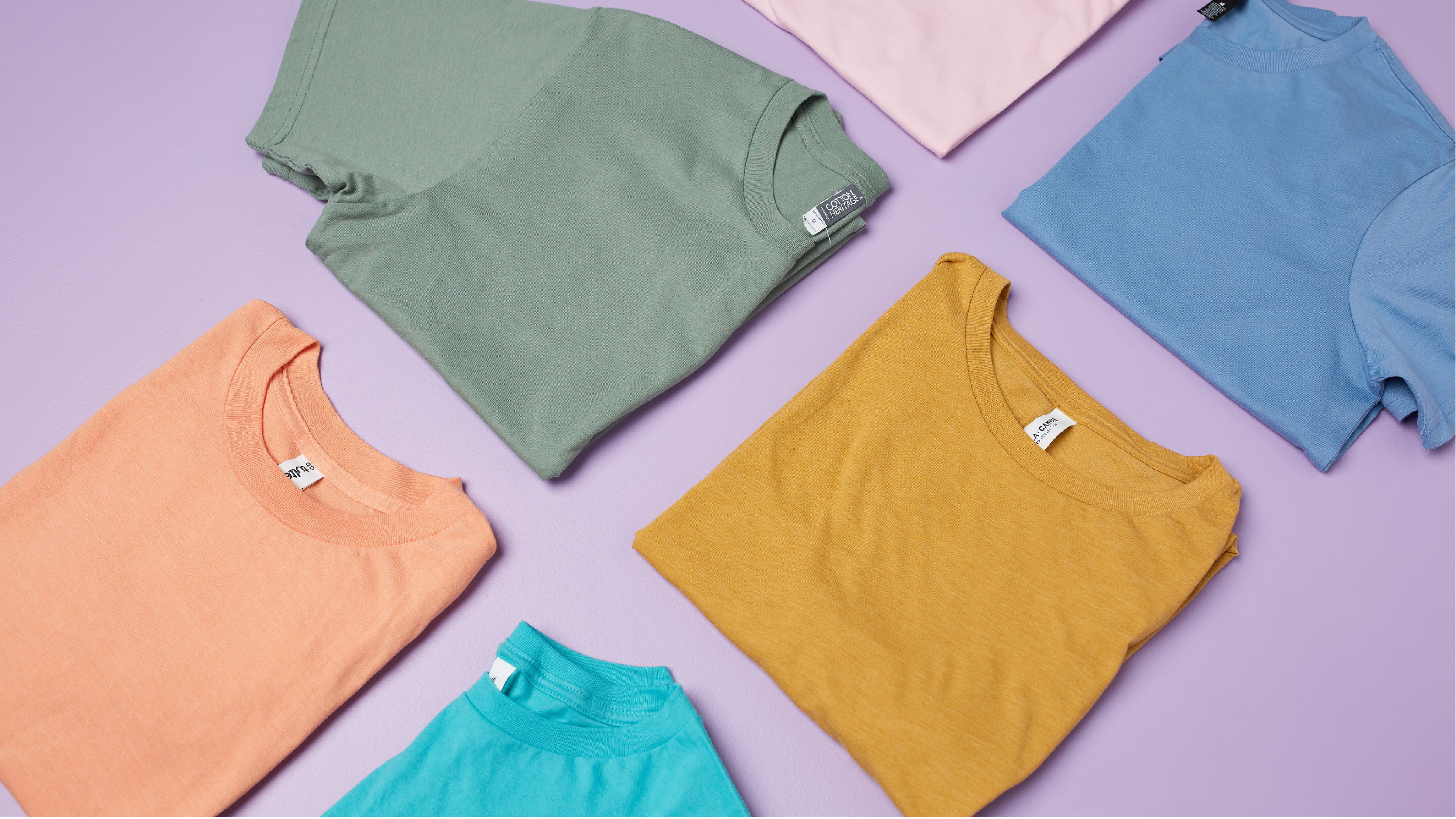
The first misconception that customers have about screen printers is that they actually stock t-shirts on their shelves. A few years ago, when I was getting shirts printed for my band, I just assumed that the screen printer had all the t-shirts on hand. Working at Threadbird has shown me that many people have the same assumption.
So lets talk a bit about the reasons, positives and negatives, why most screen printing companies don’t carry stock themselves.
Reason #1
Too many brands, styles and colors.
Let’s use our most popular selling t-shirt, the American Apparel 2001 unisex tee, as an example. The AA 2001 alone (not including the AA 2001 Organic) comes in almost 60 different colors and 7 different sizes! Take a moment to envision how much warehouse space would be required to stock that inventory. Now multiply those numbers out over the 30+ styles of standard crew neck t-shirts that Threadbird offers…
Reason #2
Manufacturers, wholesalers and shipping times.
There are wholesalers out there that specialize in buying stock directly from manufacturers. These companies warehouse and ship stock to screen printers within a matter of days! They have the warehouse space, buying power and shipping power and play a vital step in the success of getting your t-shirts to us, allowing us our to concentrate on our specialty, screen printing.
Reason #3
Money, money, money…
Most importantly, not stocking inventory allows us to keep costs down and keep customers happy.
Does ordering stock slow down the process?
The entire screen printing process (normally) takes around two weeks to complete and getting stock only takes a matter of days which really never effects the customer. The only times there might be an issue are if a customer changes their mind on what stock they want after an order is placed or suppliers (occasionally) run out of certain sizes or colors. Having stock run out is not very common, but can happen from time to time. In the event that certain stock does run out, Threadbird is excellent at finding you a comparable option.
How will I know if I like the feel and fit?
Threadbird will gladly order sample blanks for you so that you know exactly how the shirt will feel, fit and look. Never hesitate to ask your Threadbird rep if you have questions on blanks or if you really want a hands on approach have them order you some blanks and compare for yourself!
We hope this helps! Stay tuned for the next installment of Common Misconceptions…